Tera Gyan
Your knowledge · formerly Shilpi ke liye Gyan
A six-credit craft and art module that brings design thinking to practising artisans.
Sangraha Vernacular Centred Design Foundation · Lucknow · Since 2015
We work with chikankari and ari artisans in and around Lucknow, most of them women working from home. Through design education, health care and fair work, we help craftspeople be recognised and paid for the excellence of their practice.
Social impact
Around Lucknow there are about 2.5 lakh chikan artisans, roughly two lakh of them women. Most earn just ₹800 to ₹1,500 a month (about US$9 to $17). That is where our work begins.
“These women weren't even allowed to go out of their houses.”Dr Jaspal Kalra, President
Tabassum never went to school and was married at sixteen. She earned ₹1,200 to ₹2,000 a month (about US$14 to $23) and had almost given up embroidery, only passing work on to others. After the design programme she earned over ₹80,000 (about US$900) in six months from her own collections, sold at exhibitions and online.
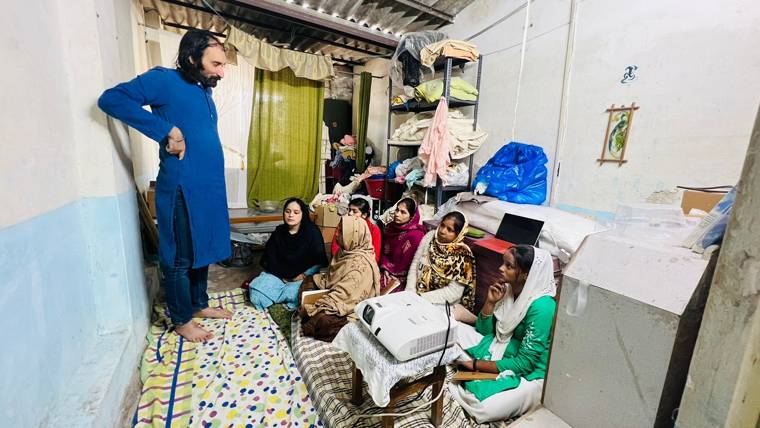
Course-trained women now quote fair rates, travel to exhibitions with their own samples, and have a stronger say at home. The first batch designed collections on the tree of life, the jewellery of Awadh, day and night, and mehendi.
Recognition and reach
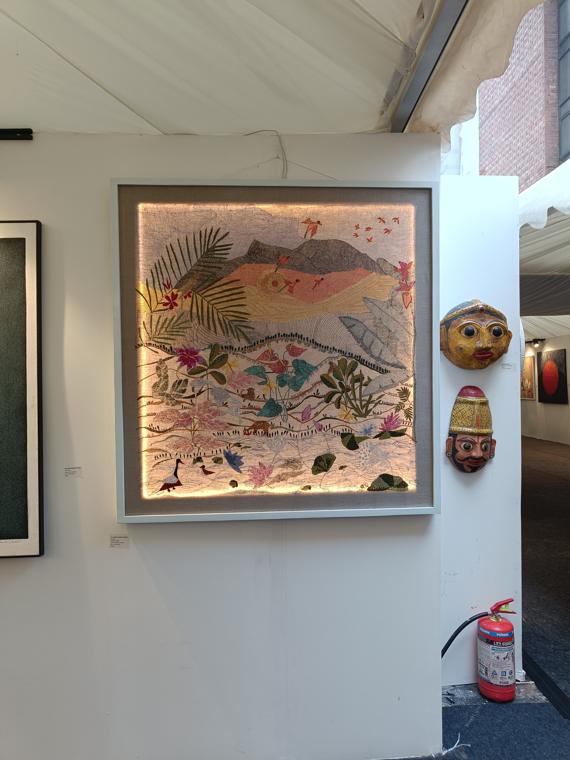
Recognition · 2024
The Times of India honoured Sangraha at the Art of India fair in 2024 for innovation and contribution in textile art. The work shown, a large embroidered landscape of hills, water, birds and blooms, was embroidered by Sangraha artisans. It was conceptualised and drawn by Dr Jaspal Singh Kalra.
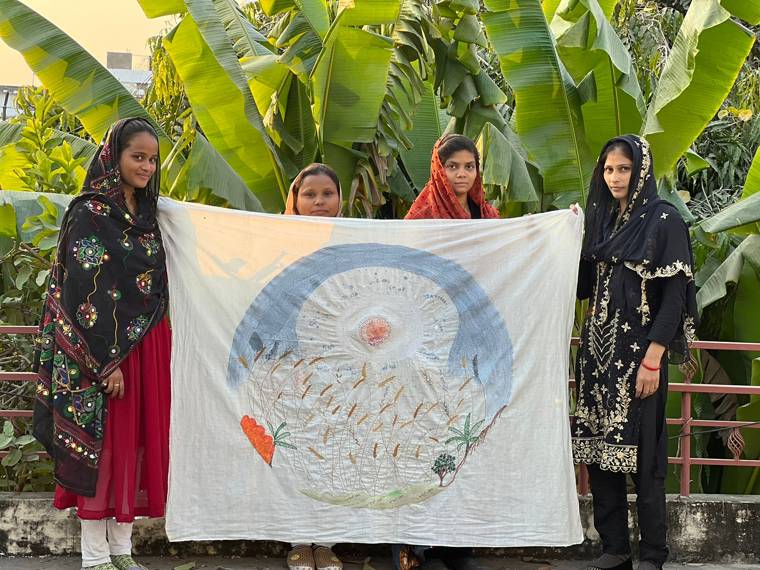
Museums Victoria, Melbourne · 2023
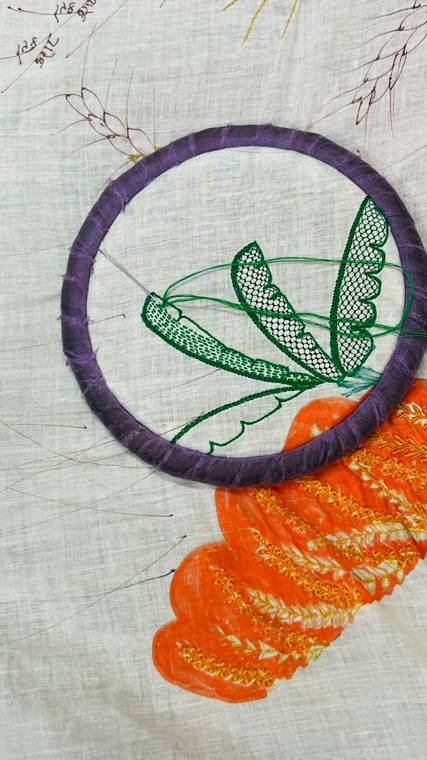
This artwork, a sun over a ring of sky and a field of ripening wheat, was shown at Museums Victoria in Melbourne in 2023, in Sutr Santati: Then. Now. Next. It was the first textile exhibition to travel outside India that was conceived, curated and created by a team of Indian academics, designers, artists and artisans. Sangraha artisans embroidered it in jaali, phanda and shadow work. It was conceptualised and drawn by Dr Jaspal Singh Kalra.
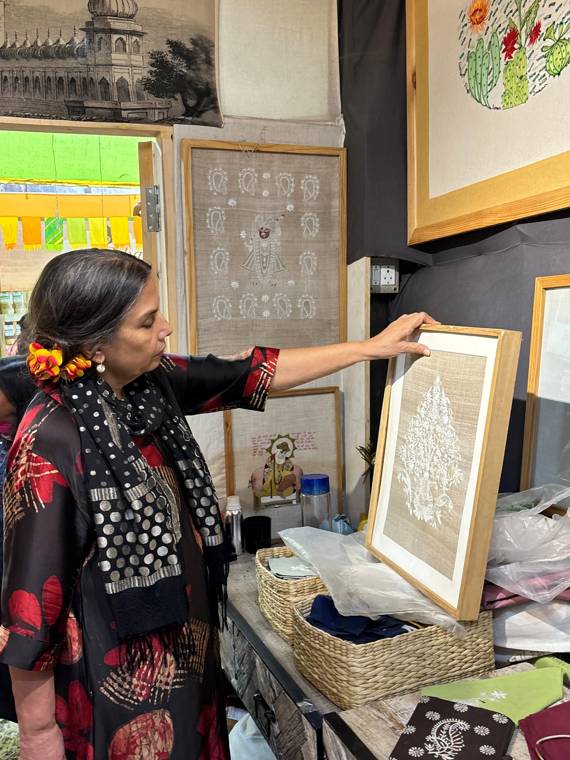
In good company
“The innovation in terms of technique and exploration of jali in artworks is exceptional and needs to be shared and collaborated with the world.”
Actor and activist Shabana Azmi, studying a framed white chikankari tree of life by Sangraha artisans.
Why ₹1,300
13As a young storekeeper at Sultanpur Lodhi, Guru Nanak was weighing out grain. When the count reached thirteen, tera in Punjabi, a word that also means yours, he kept repeating it: tera, tera, everything is Yours.
Many count thirteen as unlucky. For us it is a reminder that what we hold was never only ours. Our Sab Tera work grew from that idea, and every way of giving to Sangraha comes in units of ₹1,300.
Exhibitions and conversations
A series of exhibitions and conversations hosted by the Foundation. The exhibitions draw on the bani of Guru Nanak and premiered at the Visual Arts Gallery, India Habitat Centre, New Delhi in November 2021, in collaboration with the Sikh Chamber of Commerce. Every work is credited to the Sangraha artisans who embroidered it, as its artists, and their names are stitched into the cloth.
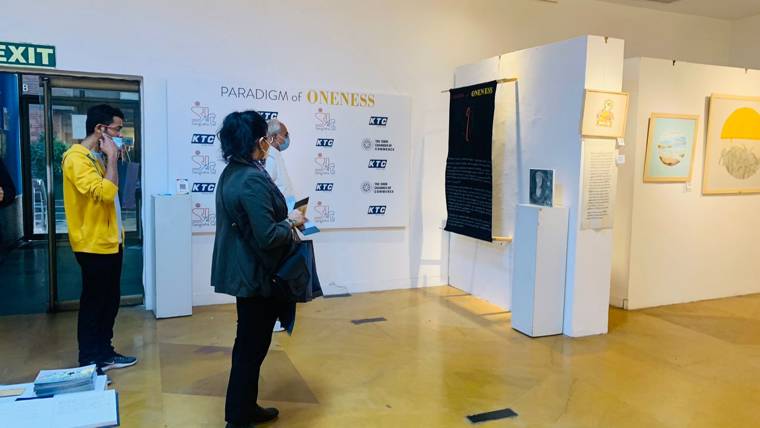
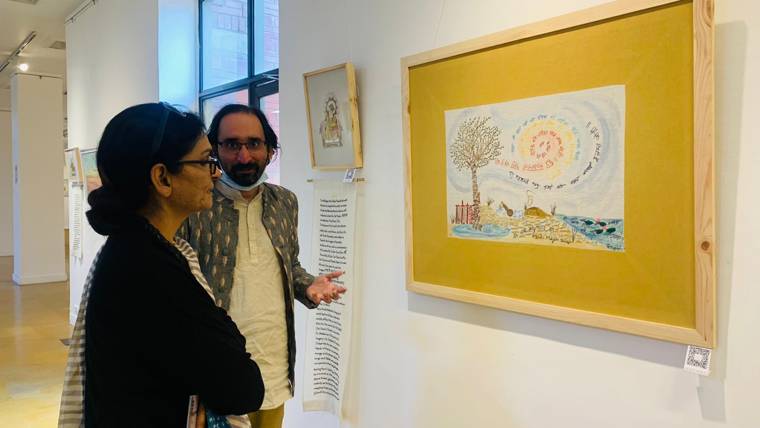
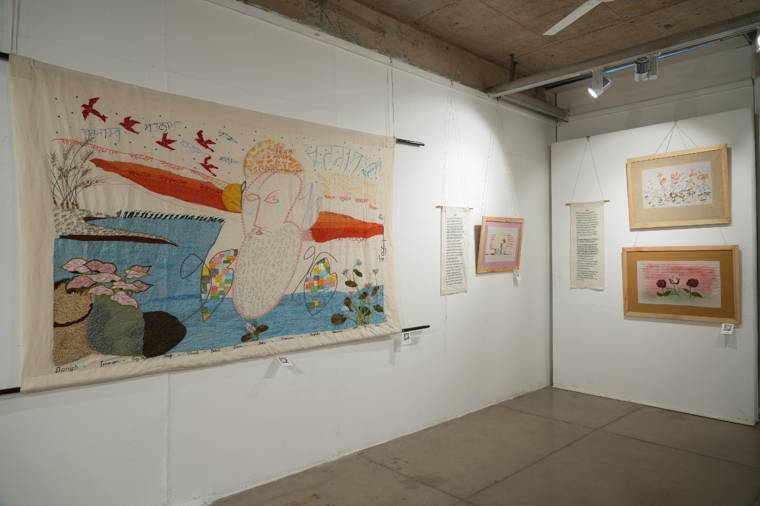
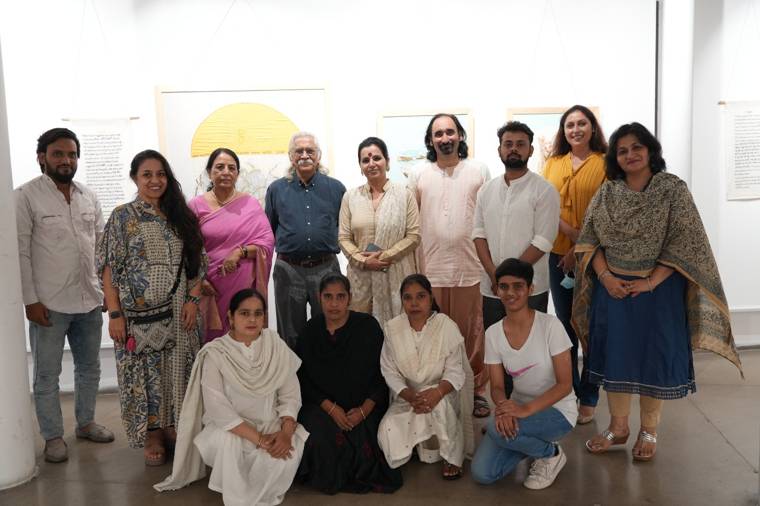
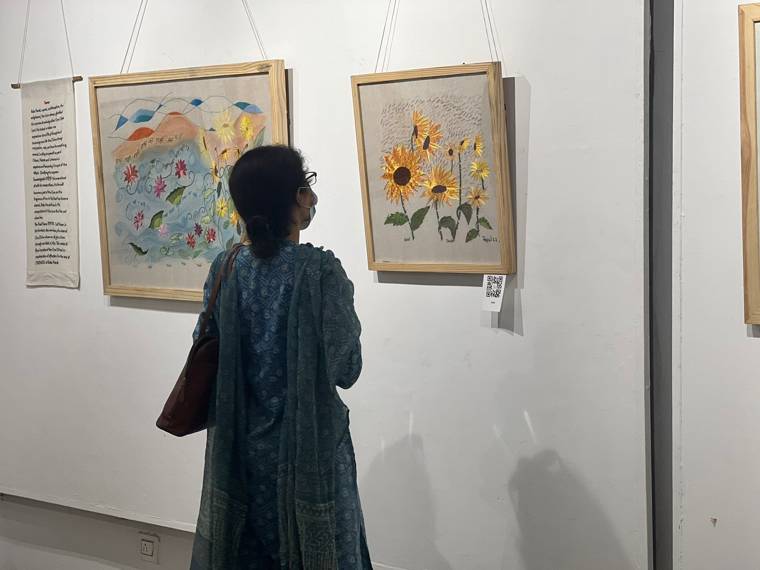
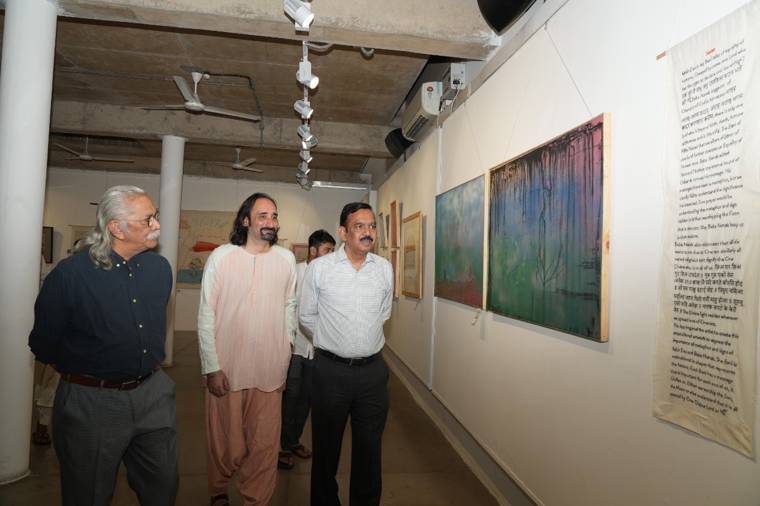
Panel discussions curated by the Foundation, with speakers from around the world. Each one explores Oneness in spirituality, art, craft, professions, the environment, gender, faith, and social and economic life.
Sab Tera initiatives
Each programme carries the spirit of Tera: what we hold was never only ours, so it goes back to the artisans who make the work.
Your knowledge · formerly Shilpi ke liye Gyan
A six-credit craft and art module that brings design thinking to practising artisans.
Your skill · formerly Karigari aur Hunar ki Pathshala
Mentoring, motivation and skills guidance for artisans in the Sab Tera team.
Your livelihood
A skill cannot feed a family until it finds a buyer. Tera Rizak pays trained artisans a steady livelihood wage through that gap, so no one has to leave the craft just to survive. Those it carries become artisan leaders, who now run their own teams and pass on work, wages and training.
Your care · formerly Dekhbhal
Regular health check-ups and vaccination drives for artisans and their families.
Your dwelling · the Craft Experience Centre
A working studio in Lucknow where visitors meet artisans and see chikankari made by hand.
Paradigm of Oneness exhibitions and monthly conversations, a pilot collaboration with the artist Aditya Chintapalli, a manji weaving design intervention in Punjab with the Ambuja Foundation, craft installations such as A Raag of Renewal at ROWA, exhibitions like the Resurgence Series, cultural baithaks with daastangoi such as Daastaan-e-Guru Nanak, and corporate and festival gifting made by artisans. See activities
Past project · Covid relief
When the lockdown stopped all work, chikankari and ari artisans earning under a dollar a day lost their income overnight. Team members gave from their own resources, and artisans began embroidering masks so the families with the least could keep earning.
Through Dil ka Uphaar, 30 embroiderer families and 5 tailor families received steady orders, and 35 new artisans joined a work-from-home team with mentoring and skill support.
Tera, tera
Every gift to the Foundation comes in units of ₹1,300, thirteen hundred, in the spirit of Guru Nanak's tera. What you give was always theirs.
Tera Vriksh · Our structure
Sangraha Vernacular Centred Design Foundation is the holding company of Sangraha Atelier Private Limited, which owns the Sangraha brand sold at sangraha.store. The Atelier brings artisans' work to market. The Foundation invests in the artisans themselves.
Governance
 Dr Jaspal Singh KalraPresident & Perpetual MemberSocial Entrepreneur · Educator · Design ProfessionalRead profile
 Susan KoladySecretary & Perpetual MemberCorporate Trainer · Academic Content DeveloperRead profile
 Rajni KalraPerpetual MemberGarment Export Professional · Production Management · Buyer CommunicationRead profile
 Prof Jatin BhattContinuing MemberDesign Thinker · Craft Development Consultant · AcademicianRead profile
 Meera GoradiaContinuing MemberArtisan Sector Consultant · Co-Founder, Creative DignityRead profile
 Shilpa SharmaContinuing MemberEntrepreneur · Co-Founder, JayporeRead profile
 Jyotsna Kaur HabibullahContinuing MemberSocial Entrepreneur · Community Developer · Founder, Lucknow Farmers MarketRead profile
 Dr Vandana SehgalHonorary MemberArchitect · Artist · AcademicianRead profile
 Haradhya KalraVoluntary MemberGen Z Thinker · Concepts · Basketball PlayerRead profile
 Danish SiddiquiVoluntary Member · TreasurerArtisan · Social Entrepreneur · Head of Production, SangrahaRead profile
Give
Choose what your gift goes to, then how many units of ₹1,300. That one unit is close to a full month's wage for many artisans.
Design education, fellowships and materials for artisans building their own practice, through Tera Gyan and Tera Hunar.
Health check-ups, vaccinations and medical support for artisans and their families through Tera Dekhbhal.
A steady wage through Tera Rizak, so a trained artisan stays in the craft until her work finds its own market.
Sit with our artisans in Lucknow, try a stitch and share chai. ₹1,300 per person, paid after your visit request is approved. Visit fees go to the artisans you meet.
Request a visitTax. Sangraha Vernacular Centred Design Foundation's 80G registration is no longer active, so donations made now do not qualify for a tax deduction under Section 80G. You still receive a receipt for every donation.
Payments in India only. We can accept payments only in Indian rupees from Indian bank accounts and cards. International payments are not accepted.
Utilisation of funds
Our first three years, from incorporation in September 2022 to March 2026, worked out from our audited accounts. Almost every rupee went into the artisans' own programmes.
The founder's grant filled the gap whenever fees and gifts fell short. It may be returned one day, but it carries no timeline and no obligation to repay.
FY 2023–24 · first period from September 2022
FY 2024–25
FY 2025–26 · the year after the fire
In addition, Tera Rizak wages owed at year end, equal to about 43% of the year's spending, were paid out in April 2026 to artisan leaders who mentor and now run their own teams, handling payments, work distribution and training in return.
Tera Rizak, a new head. A skill cannot feed a family until it finds a buyer. Tera Rizak pays trained artisans a livelihood wage until their work finds a market, so no one has to leave the craft just to survive.
Medical support (Tera Dekhbhal). Medical care for artisans is an ongoing commitment shared between the Foundation and Sangraha Atelier, and around 10% is spent on it each year.
Your gift. Donations now go only to artisan training, artisan livelihood (Tera Rizak) and medical benefits, in units of ₹1,300. Give ₹1,300
Percentages are worked out from the Foundation's accounts audited by KANA & Associates, Chartered Accountants. Each year's spending shares add up to 100%. The split across Tera Hunar, Tera Gyan and Tera Rizak is the Foundation's own. Questions: experience@sangrahafoundation.in
Tera Dera · Craft Experience Centre · Lucknow
A working chikankari studio where artisans train, design and stitch. Visitors walk through the process from block printing to the final finish, meet the craftswomen, and try a few stitches themselves.
Facilities
One studio holds the whole journey of a piece, from the first idea to the final press.
Your sitting room · the baithak room
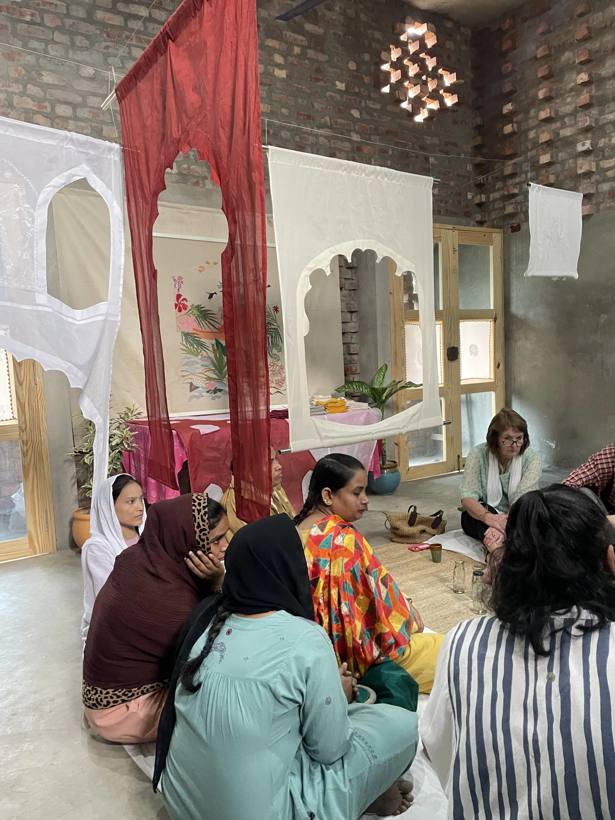
Where visitors sit down for presentations and talks on chikan, design and the people who carry it forward.
Your workshop · artisan working space and design lab
Sit beside artisans as garments and artworks take shape, and see how nearly forty stitches are combined in new ways.
Your block · printing setup
In-house chikankari block printing. Carved wooden blocks leave the blue outline that every stitch will follow.
Your display · garment display area
Finished pieces on show, with unlimited time at the Craft Store to take one home.
Your window · installation space
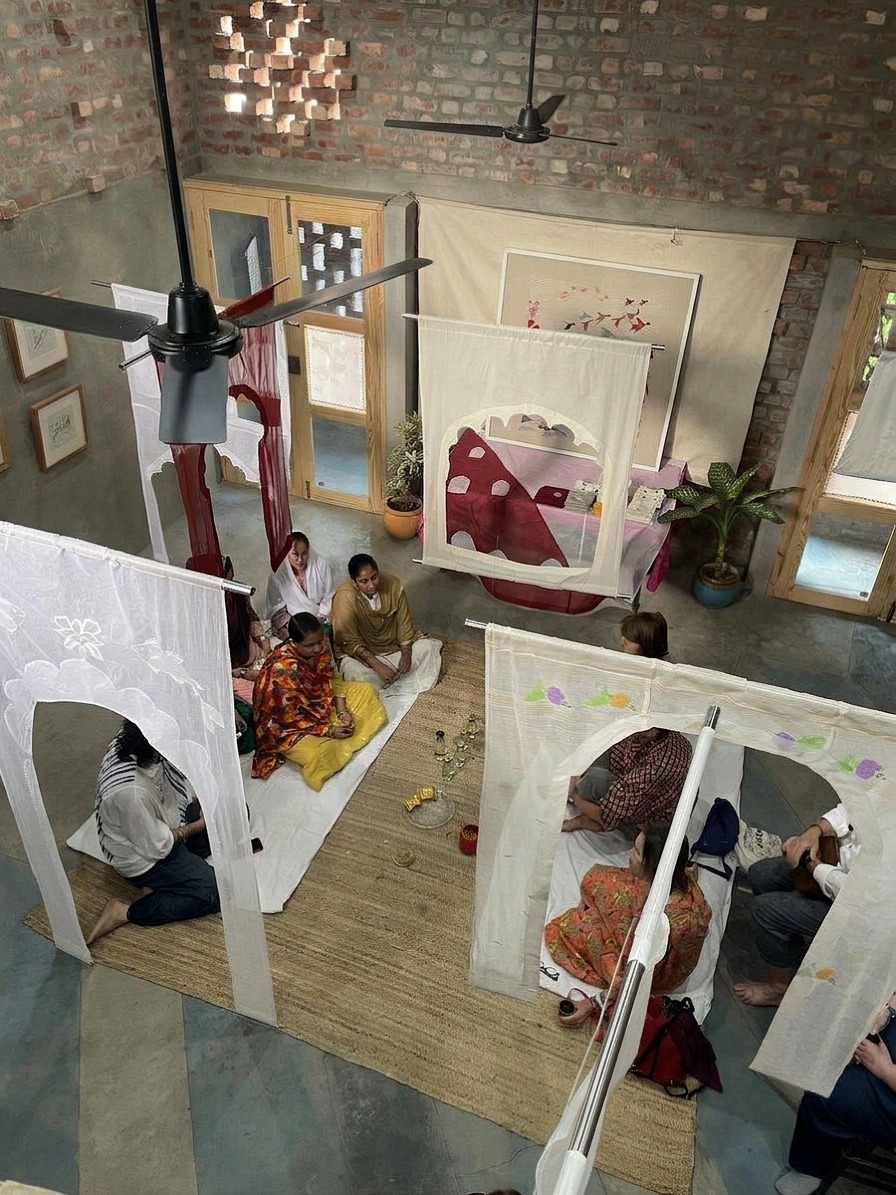
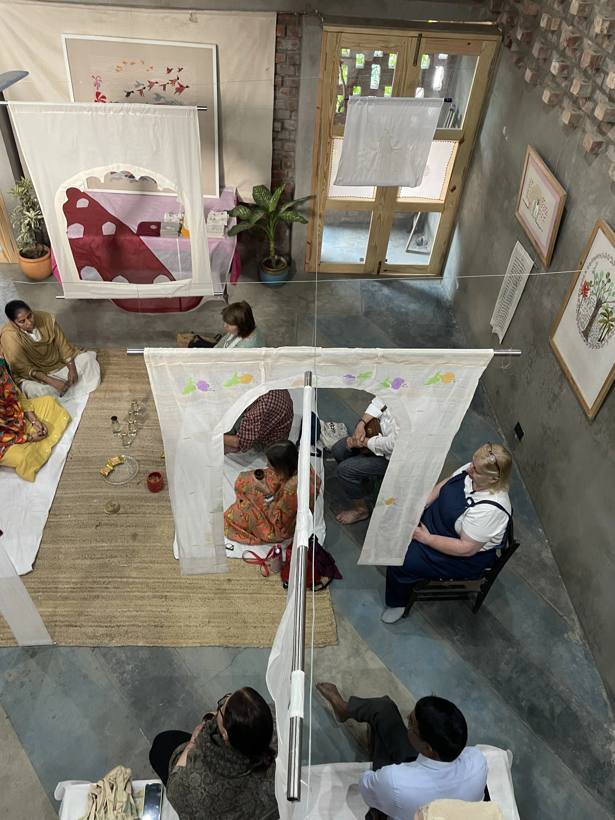
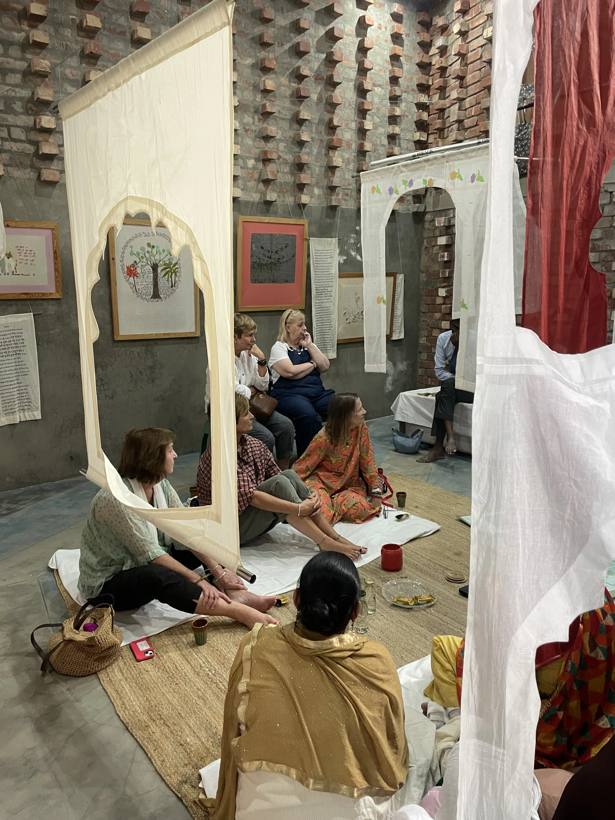
Suspended muslin and framed embroideries turn the hall into a walk-through craft installation.
Your ghat · pressing, finishing and washing
The cloth is washed to lift the blue outlines, then finished and pressed until only the embroidery remains.
Your place in the row · curated eatery space
Herbal masala chai and handcrafted ginger beer brewed by Sangraha, with traditional food from With Love Artisanal Kitchen, served in kullads from Khurja. Visitors sit on the floor in sukhasana and eat from a handcrafted pidha.
The visit
Come sit with our artisans, where every stitch narrates a moment of stillness.
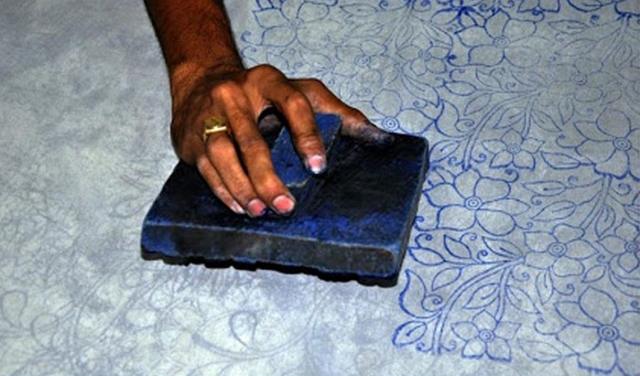 01Block printingTera ThappaA carved block and a pad of washable blue leave the outline, press by press. It is the map every stitch will follow.
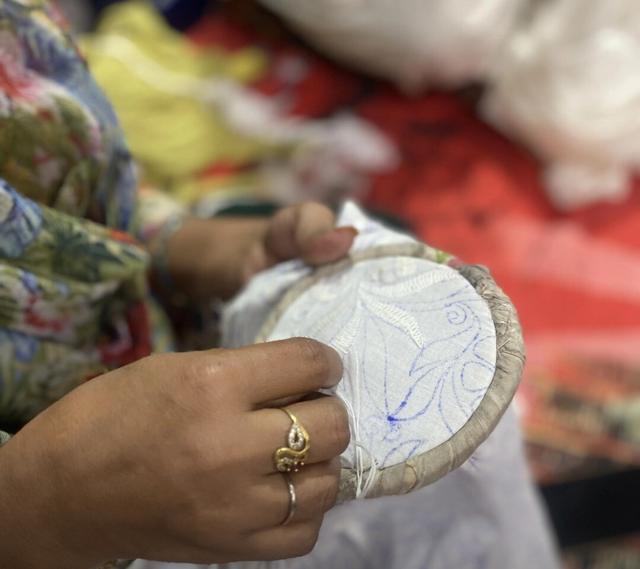 02On the hoopTera KarkhanaArtisans embroider garments and artworks along the blue lines, combining nearly forty stitches, from surface work to the open jali.
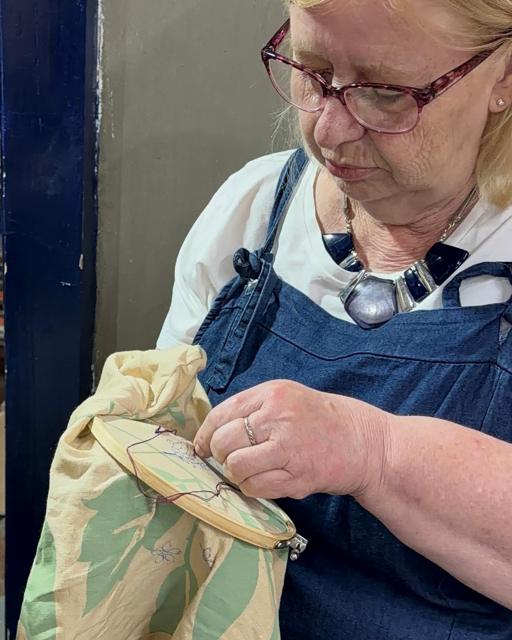 03Try your handTera KarkhanaPick up the needle. An artisan guides you through your first stitch, and its moment of stillness becomes yours.
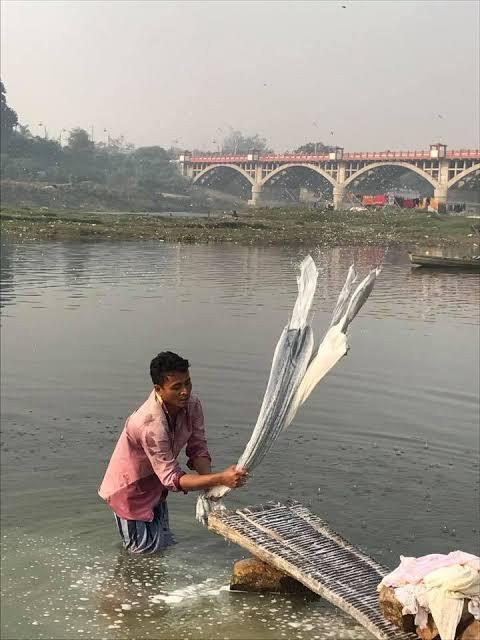 04Washing and finishingTera GhatThe cloth is washed to lift the blue outlines, then finished and pressed. The blue lines wash away. The stitch stays.
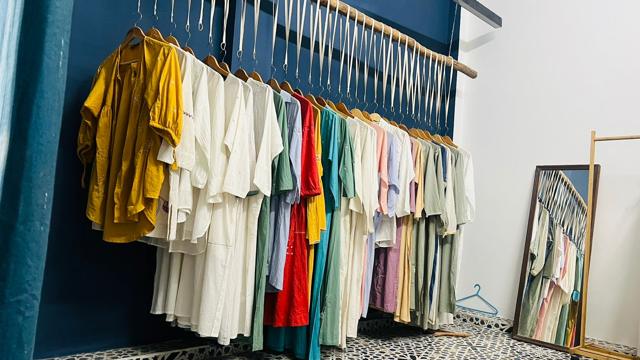 05The finished pieceTeri NumaishShirts, kurtas and dresses hang ready, and every visit includes unlimited time at the Craft Store.
 06Chai and cuisineTeri PangatEvery visit includes spiced brewed tea and handcrafted ginger beer, both by Sangraha, with a taste of Lucknow: khajoor mathi, nimish in season and Sharma ji ke samose, alongside gulkand and sattu bars from With Love Artisanal Kitchen. Served in kullads from Khurja in our curated eatery space, where you sit on the floor in sukhasana and eat from a handcrafted pidha.
In every visit, too: how we innovate with stitches, conversations on the impact and culture of chikan, and time to talk with the artisans in their own words.
Installations
Suspended muslin arches, embroidered and cut by Sangraha artisans, turn the hall into a walk-through installation. Framed embroideries line the brick walls.
Tera Dera · Your dwelling
Where every stitch narrates a moment of stillness. Visits start at ₹1,300 and go back to the people you meet.
Book a visit
So artisans' working days are respected, every visit is approved by our team first.
Activities
The Experience Centre also takes craft out into the world, through installations, gatherings and gifts that keep artisans in work.
Artist collaboration · Pilot
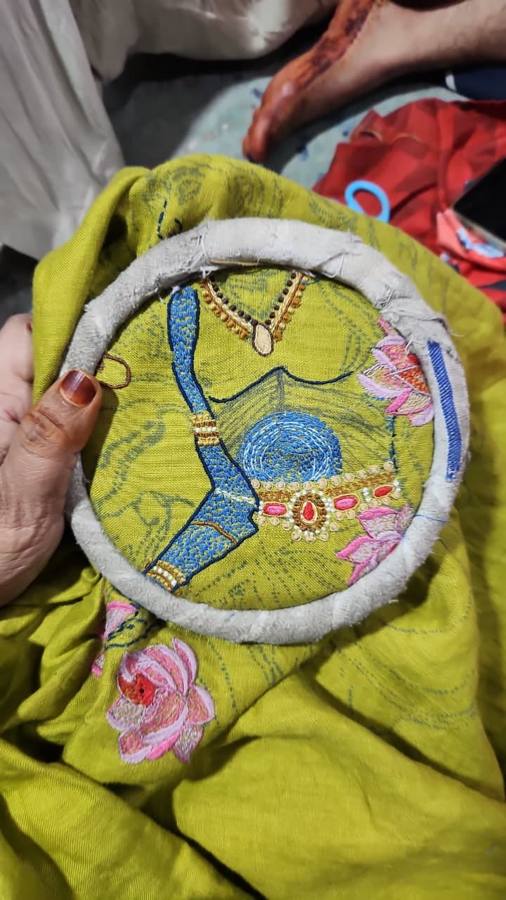
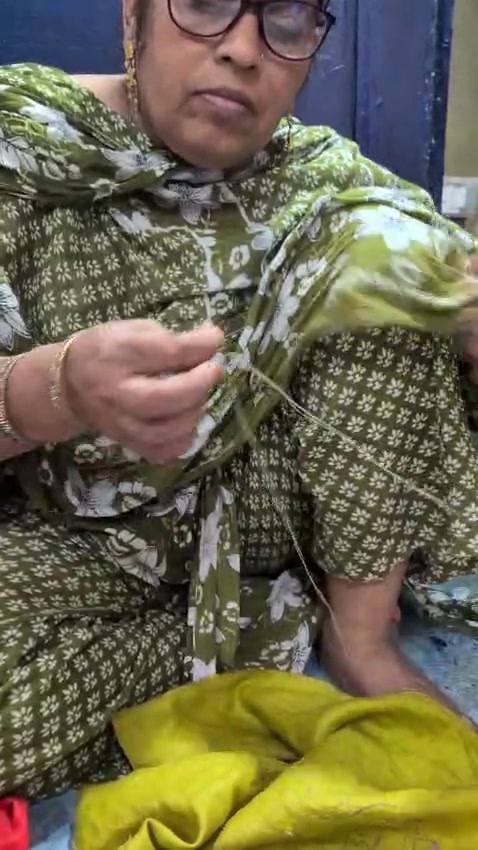
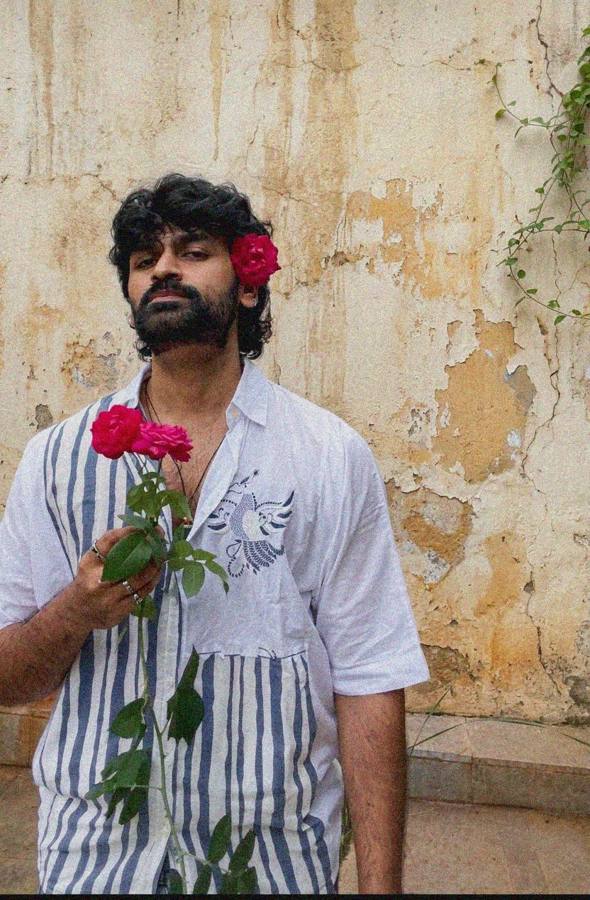
A new collaboration with the artist Aditya Chintapalli is in its pilot stage. Sangraha artisans are testing how the artist's figures, jewellery and lotuses translate into hand embroidery, in colour, stitch by stitch on the hoop.
Collaborations like this one give artisans new kinds of work, and they put the artisans' skill in front of new audiences.
Installation and curation · Featured
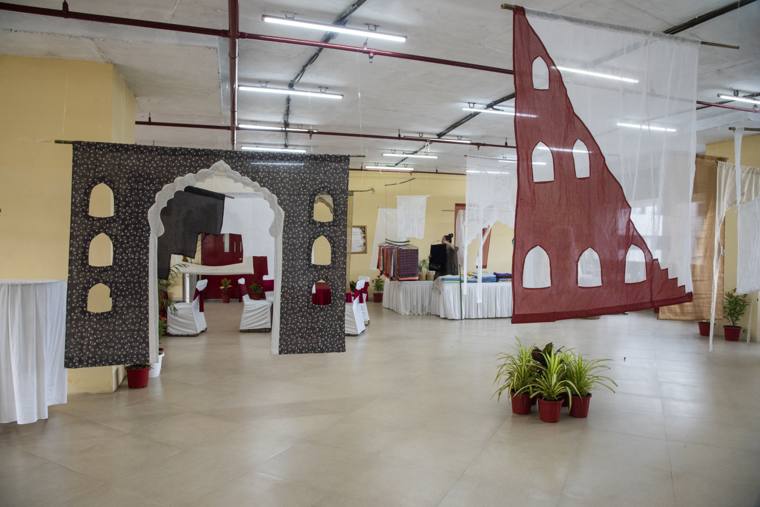
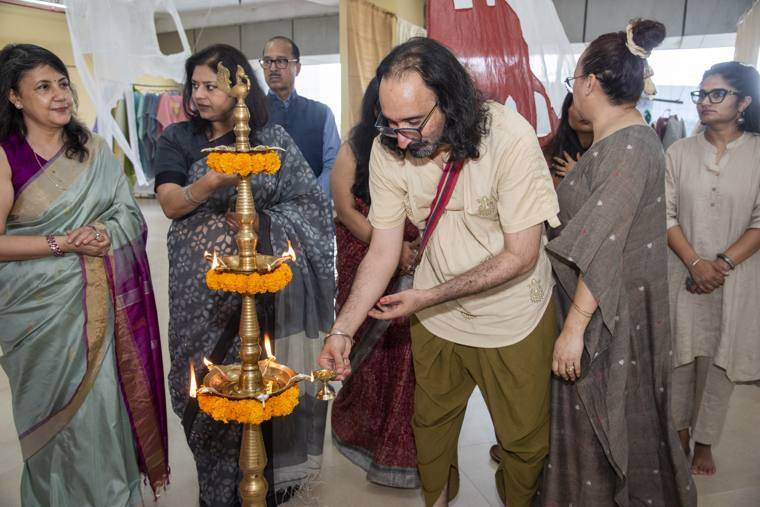
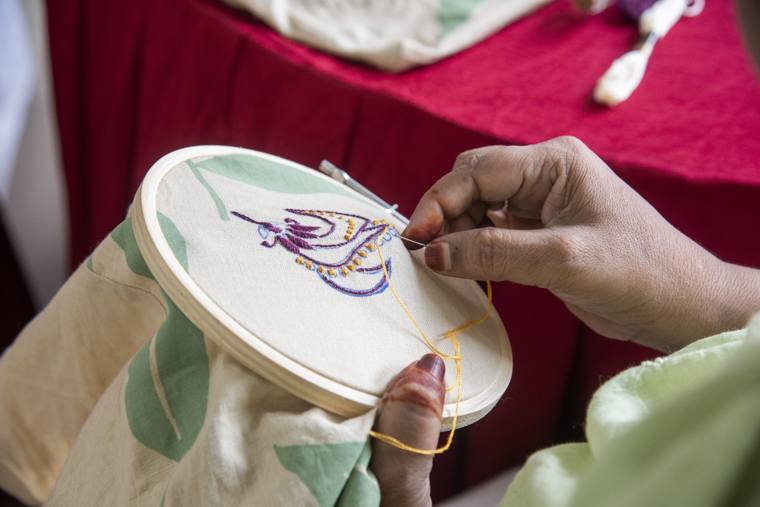
For ROWA's A Raag of Renewal, Sangraha installed and curated the whole space. Suspended cloth arches and cut-out jharokha walls turned an open hall into rooms to walk through. Artisans embroidered live, and craft stalls were set within the installation.
The event opened with the lighting of the lamp, and visitors moved between the arches, the stalls and the women at work.
22 September 2026 · Civic Centre, Minto Road, New Delhi
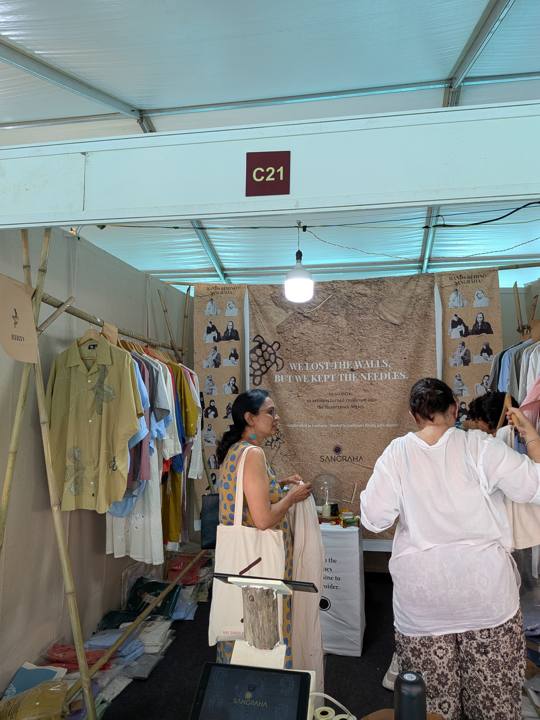
Exhibitions · Resurgence Series · Dastkar Bazaar, Bengaluru, May 2026
In one morning, a fire took what had been built over years: the art, the clothing and the experiential space.
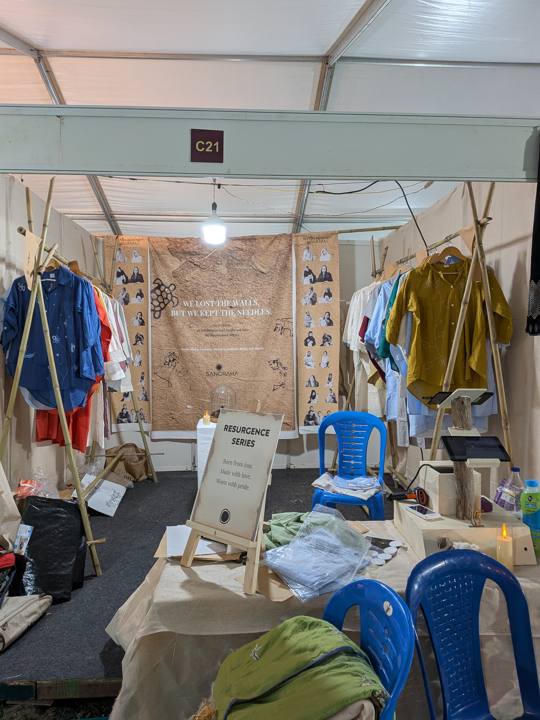
In 60 days, 30 artisans turned resilience into the Resurgence Series: born from loss, made with love, worn with pride. It was shown at Dastkar Bazaar, Bengaluru, in May 2026. At exhibitions the work travels with the people who made it, and the stall wall carries their portraits as the Hands Behind Sangraha.
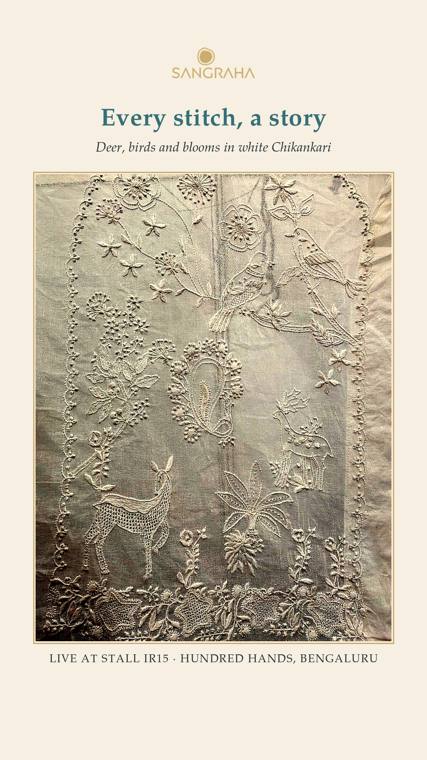
Sangraha also shows at craft exhibitions such as Hundred Hands in Bengaluru, where white chikankari panels of deer, birds and blooms tell a story in every stitch.
Visitors
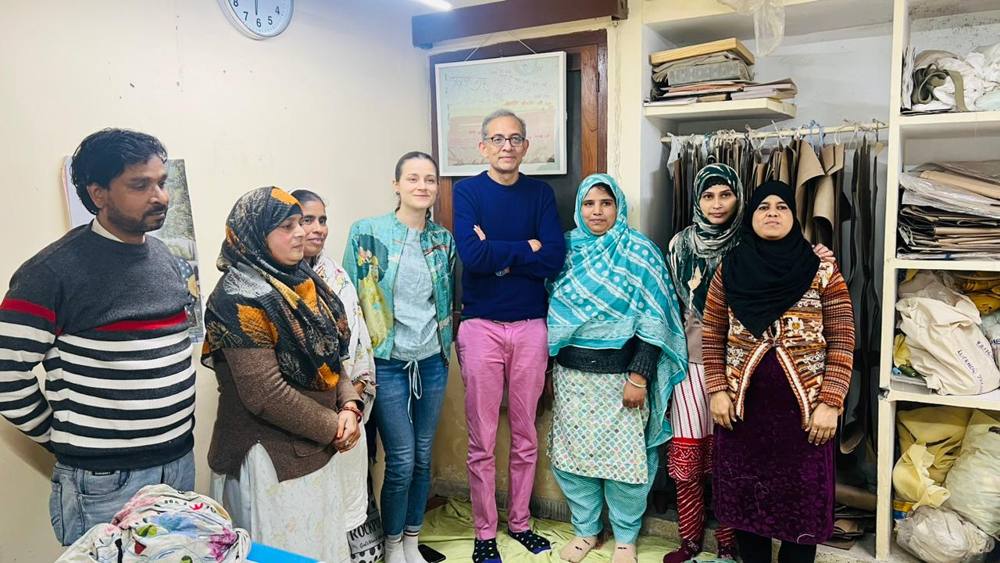
The economist and Nobel laureate Abhijit Banerjee visited the studio to meet the artisans, and is seen here with them among the work.
January 2024
Gatherings · Honouring our artisans
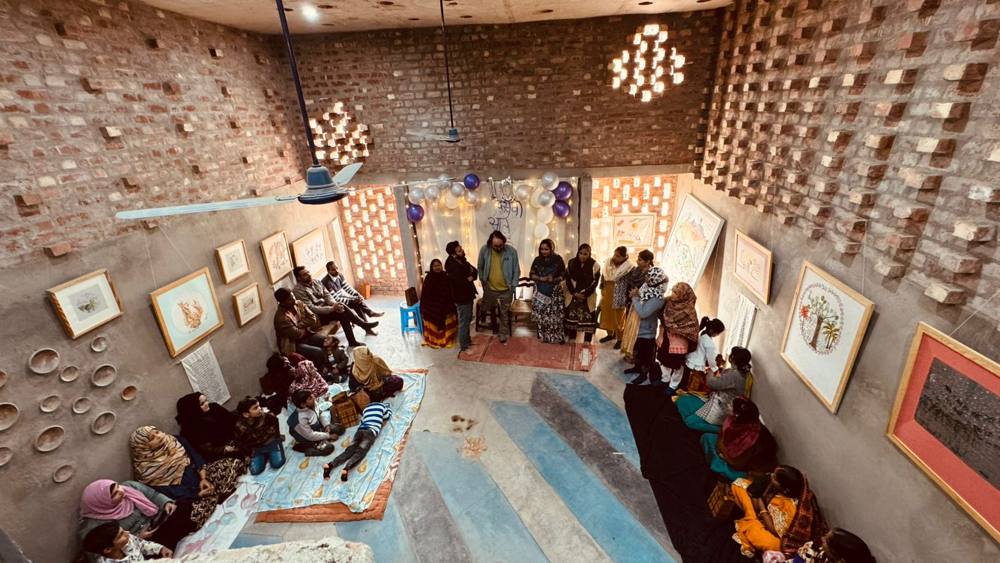
Artisans and their families gather with the Sangraha team in the jaali hall, among the embroideries they made. These get-togethers are where the Foundation honours its artisans for their skill and their years with the craft.
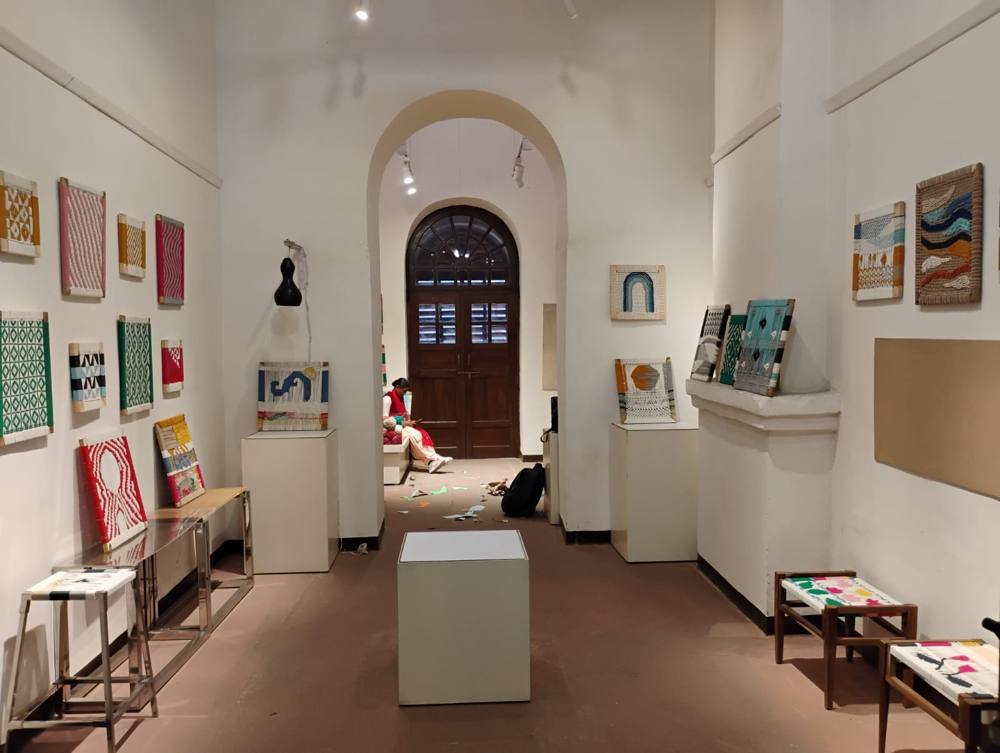
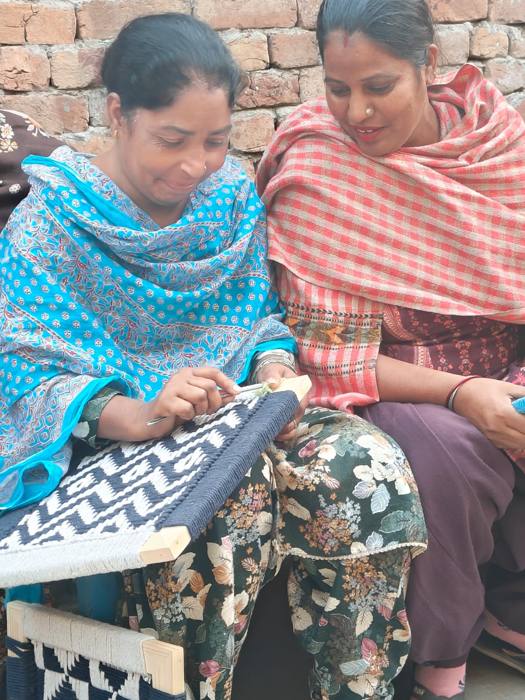
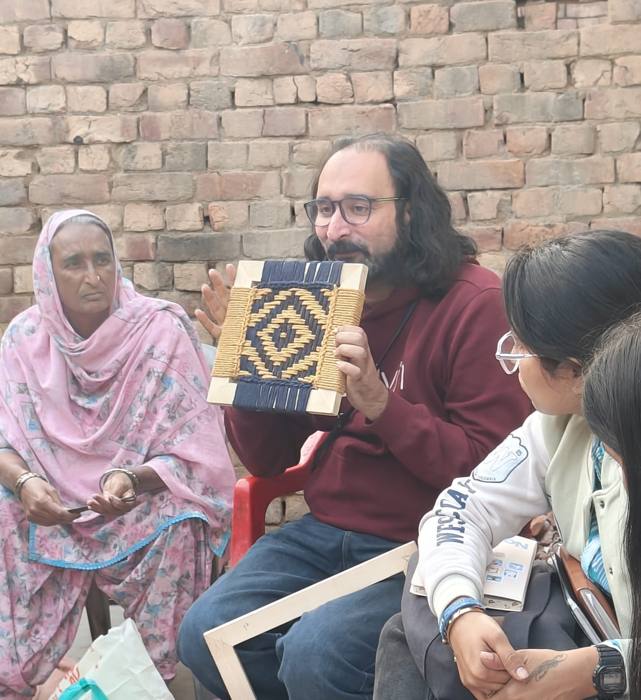
Design intervention · Manji and charpai weaving, Punjab · 2025–26
For a project of the Ambuja Foundation, Sangraha worked with women in Punjab who weave the manji, or charpai, the traditional rope-strung cot. Together they developed new patterns and colours, and turned the weave into wall panels, artworks and stools.
The creations were displayed at the IGNCA Centre for Design at the Red Fort, Delhi, where weavers also worked live in the gallery.
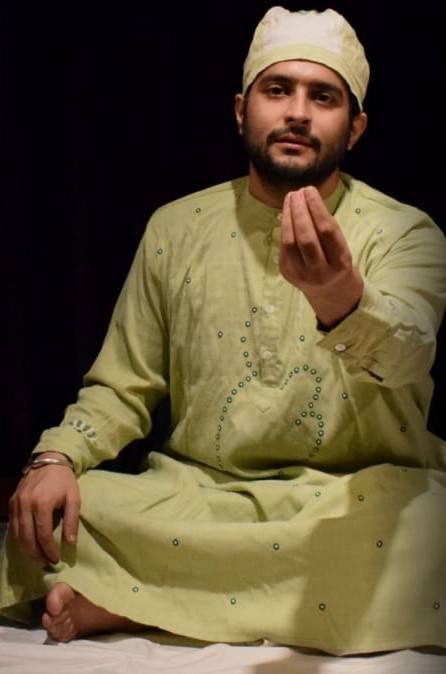
Gatherings · Cultural baithaks
Intimate evenings of music, poetry, daastangoi and conversation held among the work, in the spirit of Lucknow's baithak tradition.
Daastaan-e-Guru Nanak was one such baithak: a 90-minute musical daastaan telling the story of Guru Nanak in Hindustani, English and Punjabi, by the Atelier Repertory Company, with costumes by Sangraha Atelier.
2021 · Paradigm of Oneness exhibition, Visual Arts Gallery, India Habitat Centre, New Delhi
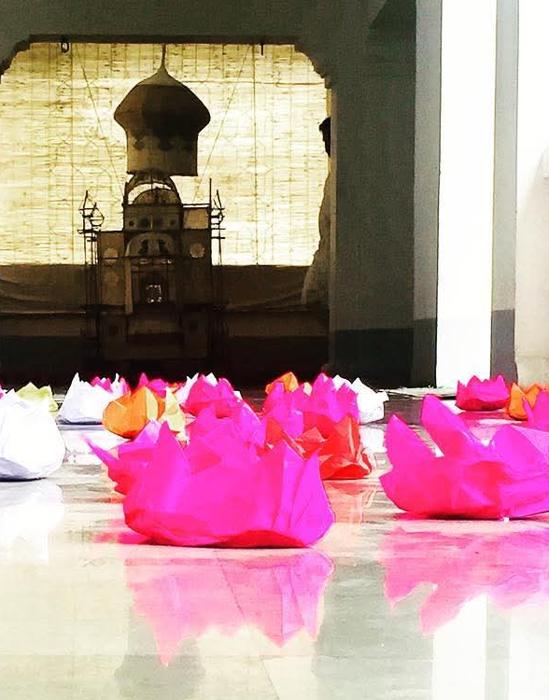
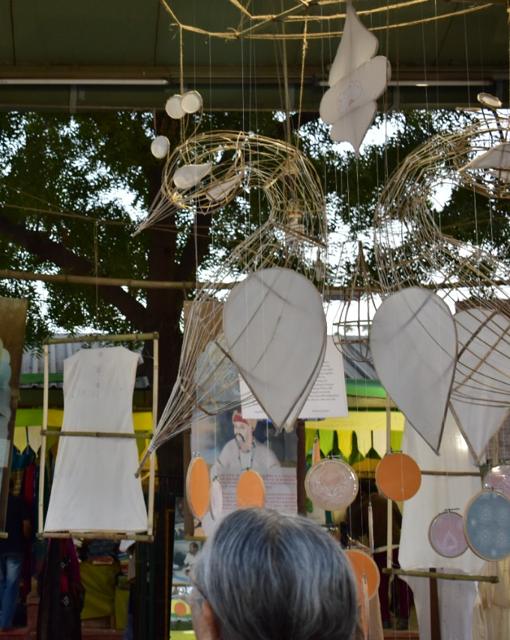
We design and install craft experiences for festivals, fairs, venues and brands, from fields of paper lotuses to suspended cane, cloth and hoops, with live demonstrations by artisans.
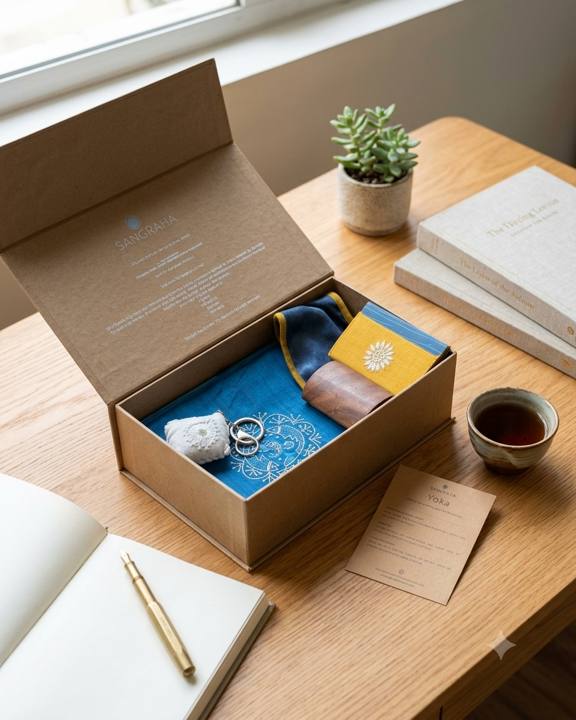
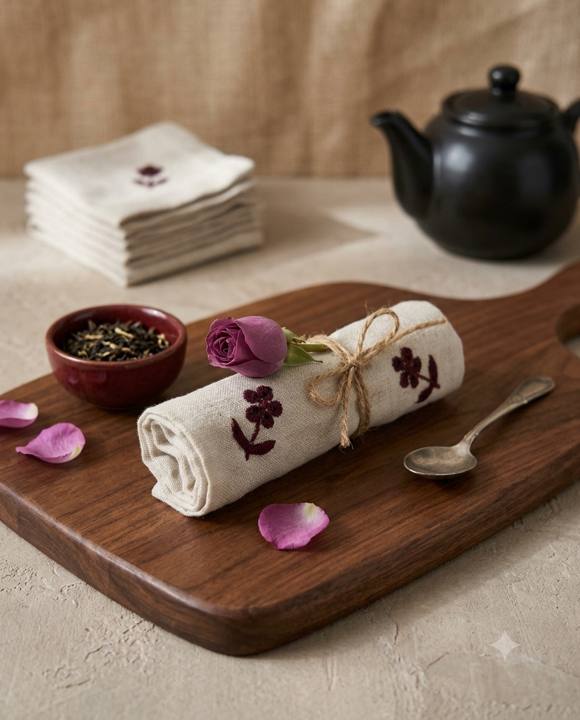
Hand-embroidered gifts made to order by Sangraha artisans for companies and festive seasons. Every order is paid work for an artisan.